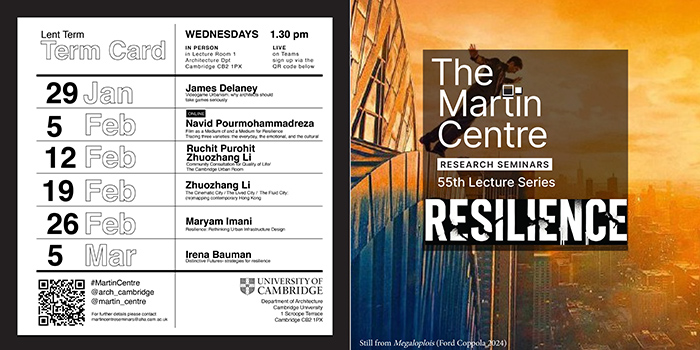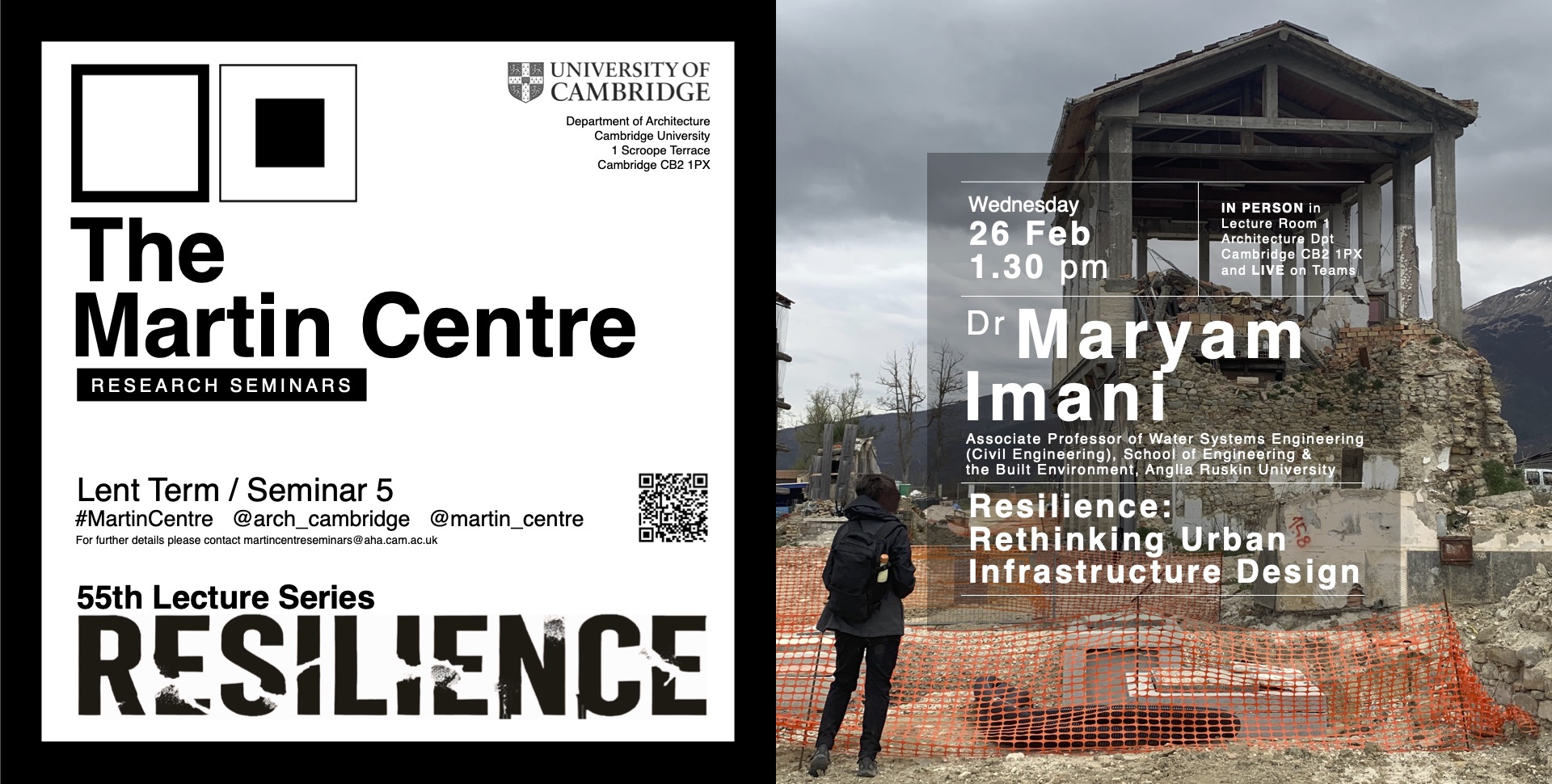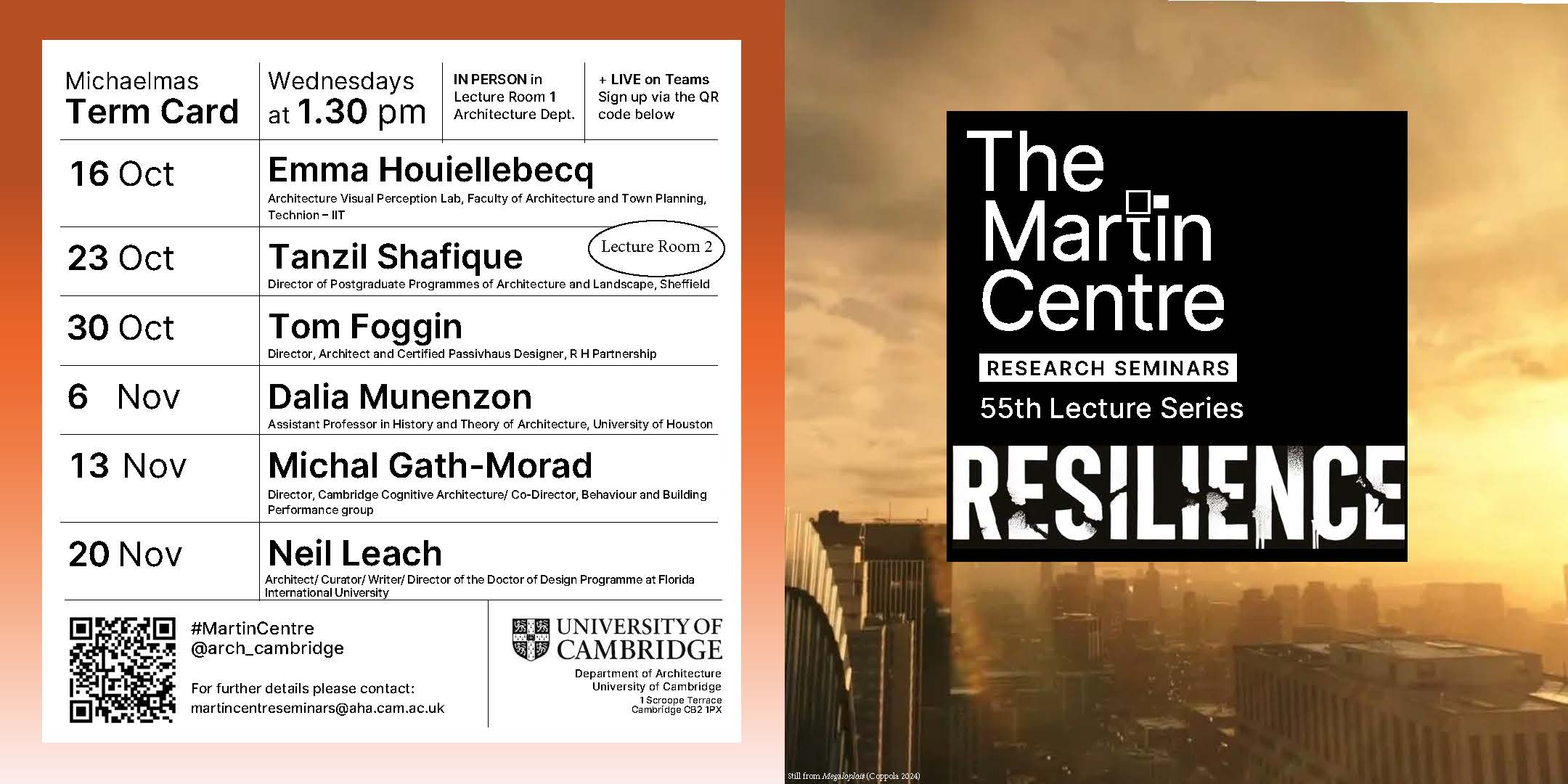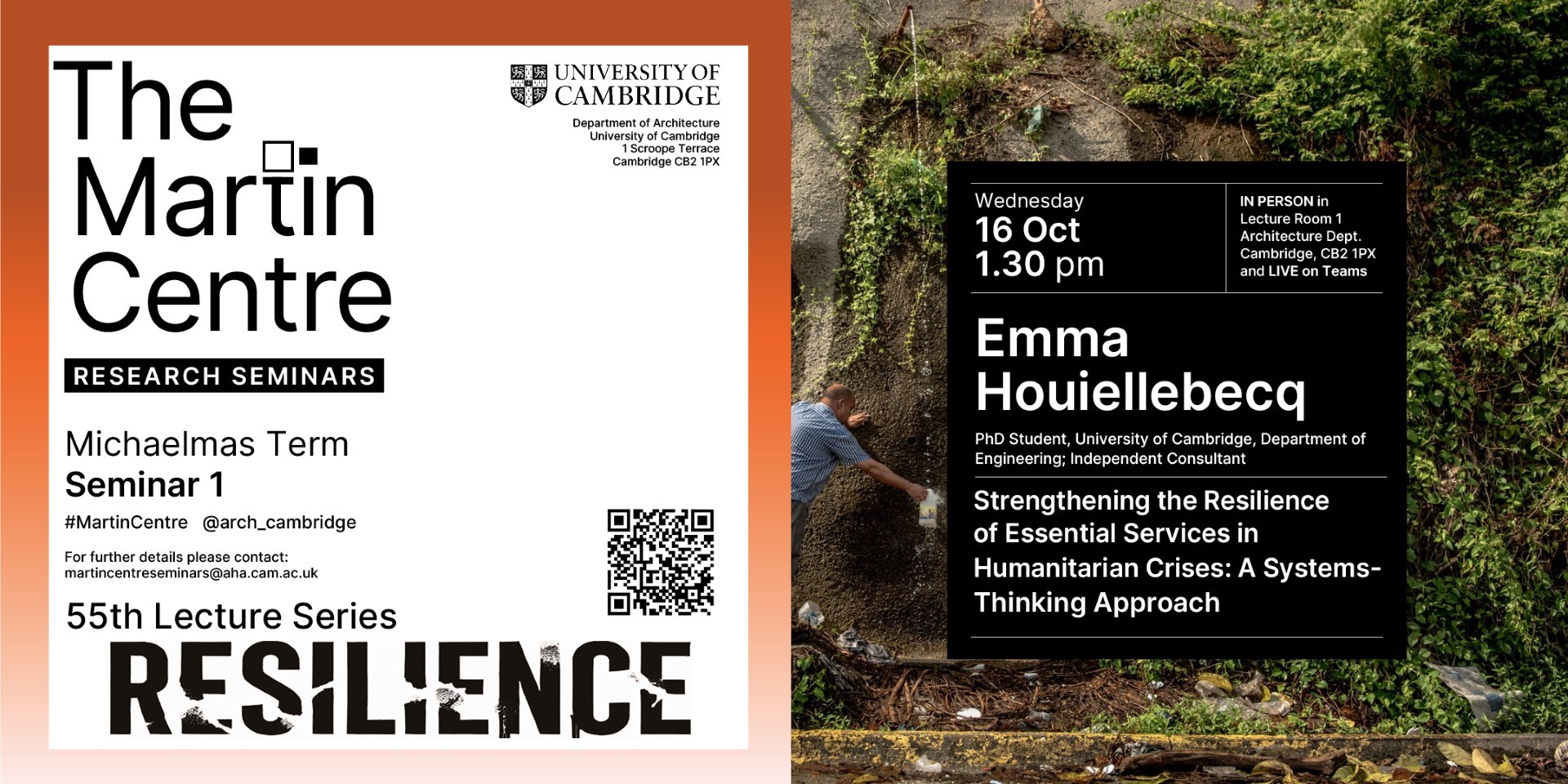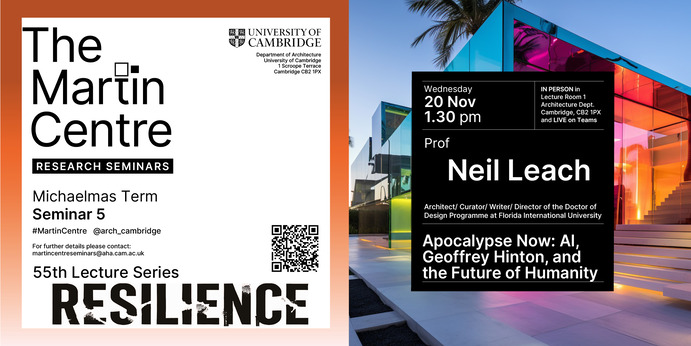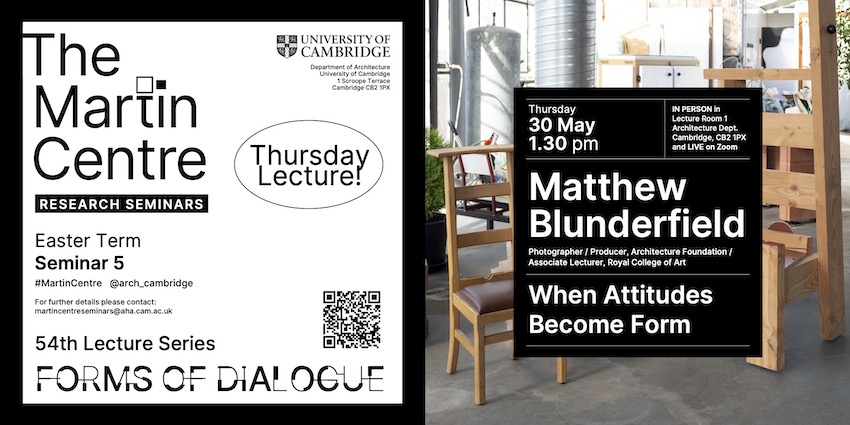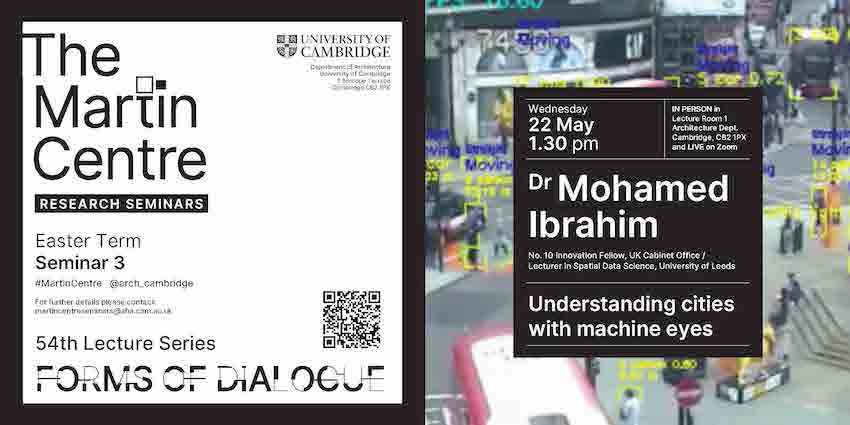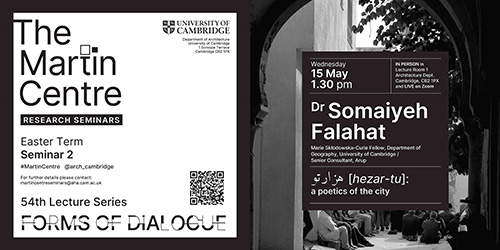
The Martin Centre Research Seminars - 55th Series
Resilience
Throughout history, numerous cities have faced destruction—sacked, shaken, burned, bombed, flooded, starved, irradiated, and poisoned. Remarkably, in almost every case, these cities have risen again like the mythic phoenix. Regardless of the scale of destruction, ranging from a small precinct to an entire city, urban areas rebuild following the devastation. They either return to normalcy in terms of social and economic relations or are repurposed as sites for tourism, education, remembrance, or even myth.
Urban disasters and resilience come in many forms and can be categorised in various ways. The scale of destruction can vary from a single small precinct to an entire city. Disasters can be understood by their causes and their impact on human life. Some large-scale disasters, such as the COVID-19 pandemic, cause widespread disruption and loss of life without physically destroying buildings. Conversely, events like the Gaza War resulted in massive casualties and extensive damage to the built environment. Regardless of the scale and source of these disasters, the psychological injuries are often profound.
In this context, the concept of resilience is complex. Physical reconstruction and emotional and cultural recovery often do not occur simultaneously, and sometimes one overshadows the other. In some cases, selective reconstruction is guided by foreign ideologies that do not align with the public’s interests. Conversely, a disaster can be an opportunity to restore a vibrant local community. Culture also plays a crucial role in this process, as forms such as film, literature, and photography help people make sense of the disaster, discover or establish meanings, and regain a sense of control over their surroundings.
This seminar series seeks to shed light on how cities and their residents manage to be resilient in different configurations of urban disasters. How do they survive and recover after periods of disappointment, collapse, depression, and failure?
Easter Term 2025
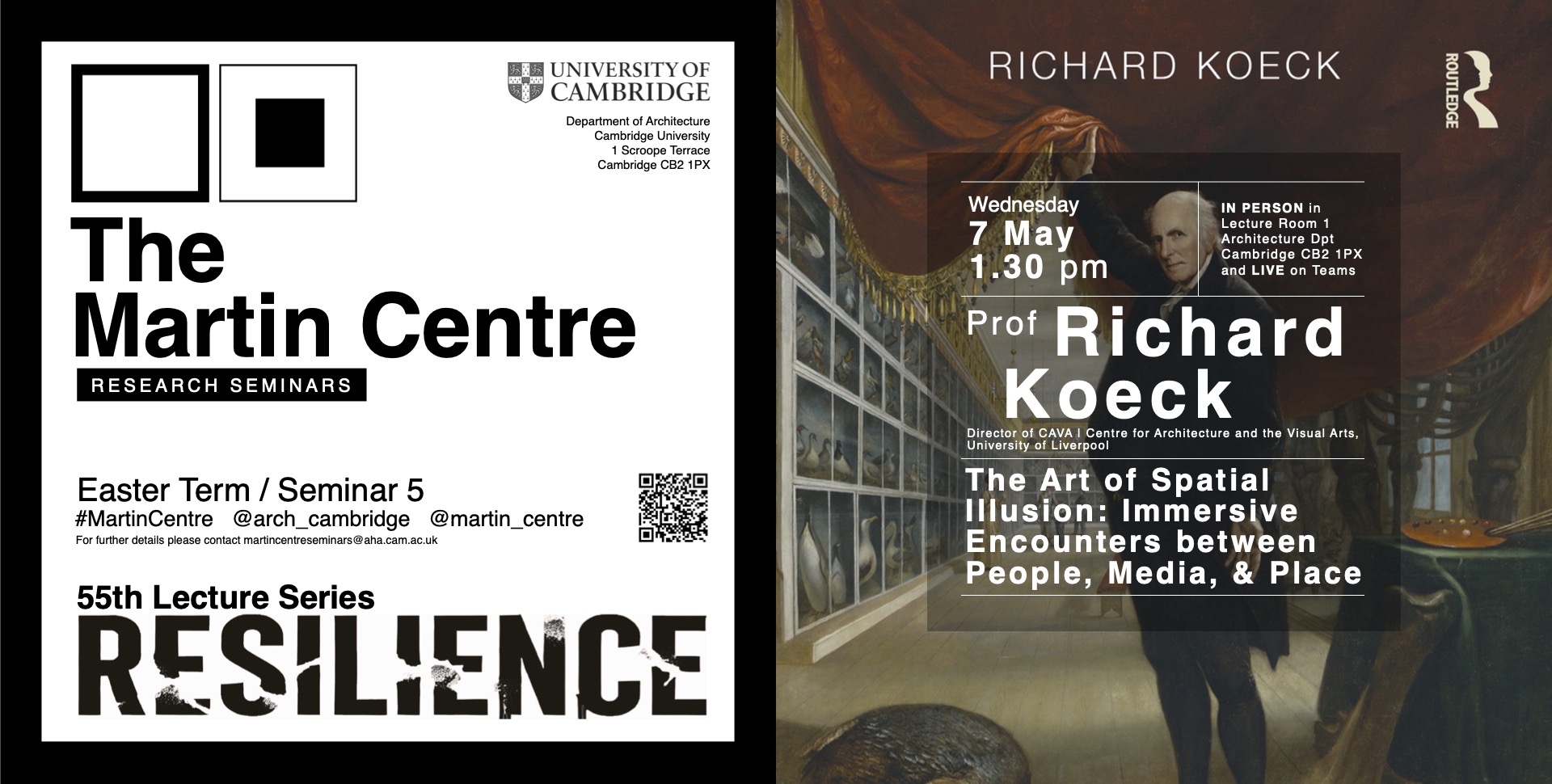
Seminar 1 / Wednesday 7th May 2025 - 1.30pm GMT
Prof. Richard Koeck will speak on his new publication: The Art of Spatial Illusion
Registration: https://www.tickettailor.com/events/martincentre/1645415
Seminar 2 / Wednesday 14th May 2025- 1.30 pm GMT
James Dunnett will speak on Martin, March, and Le Corbusier – Built Form Models and Urban Implications
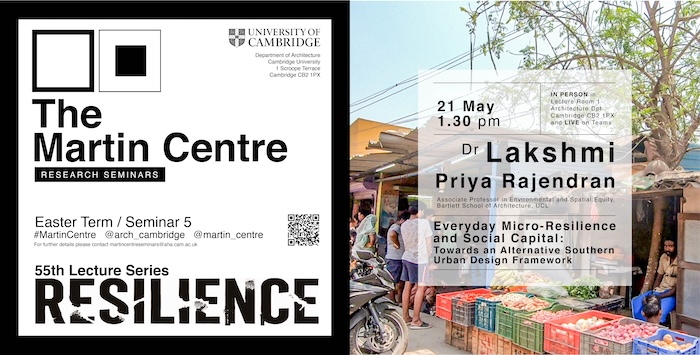
Seminar 3 / Wednesday 21st May 2025 - 1.30 pm GMT
Dr Lakshmi Priya Rajendran will speak on Everyday Micro-Resilience and Social Capital: Towards an Alternative Southern Urban Design Framework
Registration: https://www.tickettailor.com/events/martincentre/1693132?
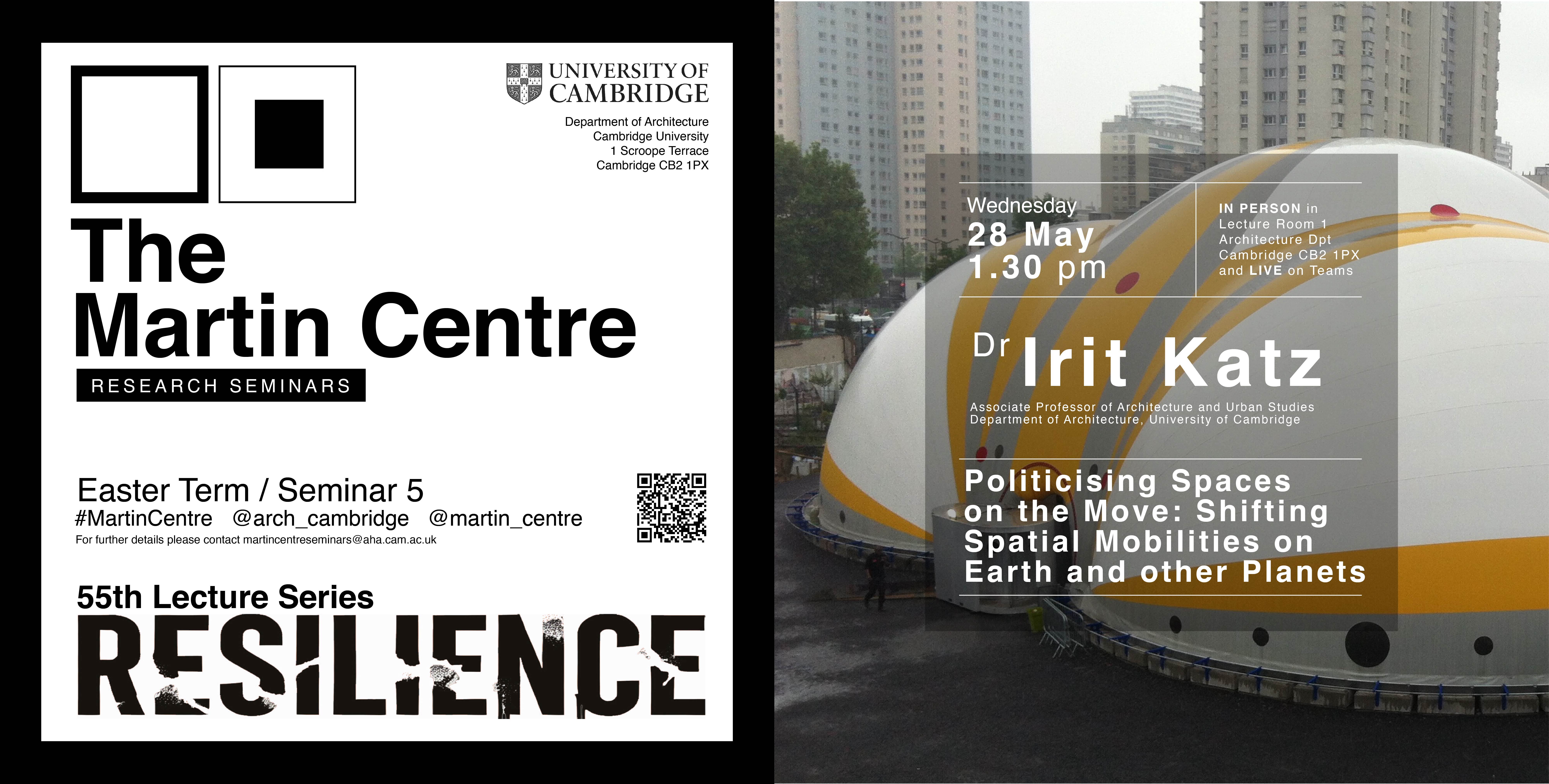
Seminar 4 / Wednesday 28th May 2025 - 1.30 pm GMT
Dr Irit Katz will speak on Politicising Spaces on the Move: Shifting Spatial Mobilities on Earth and other Planets
Registration: https://www.tickettailor.com/events/martincentre/1693133?
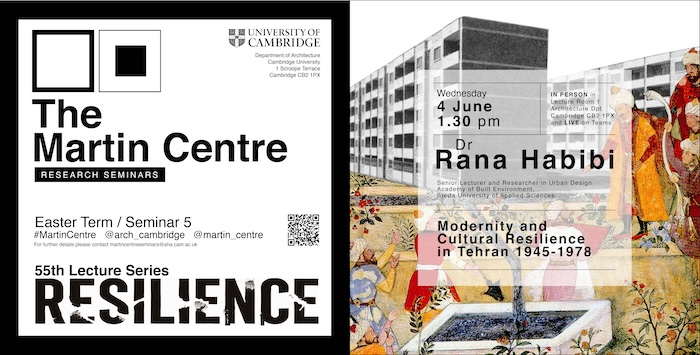
Seminar 5 / Wednesday 4th June 2025- 1.30 pm GMT
Dr Rana Habibi will speak on Modernity and Cultural Resilience in Tehran 1945-1978
Registration: https://www.tickettailor.com/events/martincentre/1693134?
………………….
Wednesdays at 1.30pm
Lecture Room 1, Architecture Department, Scroope Terrace and live on Zoom.
-------------------------------------------------------
More about the Martin Centre Lectures
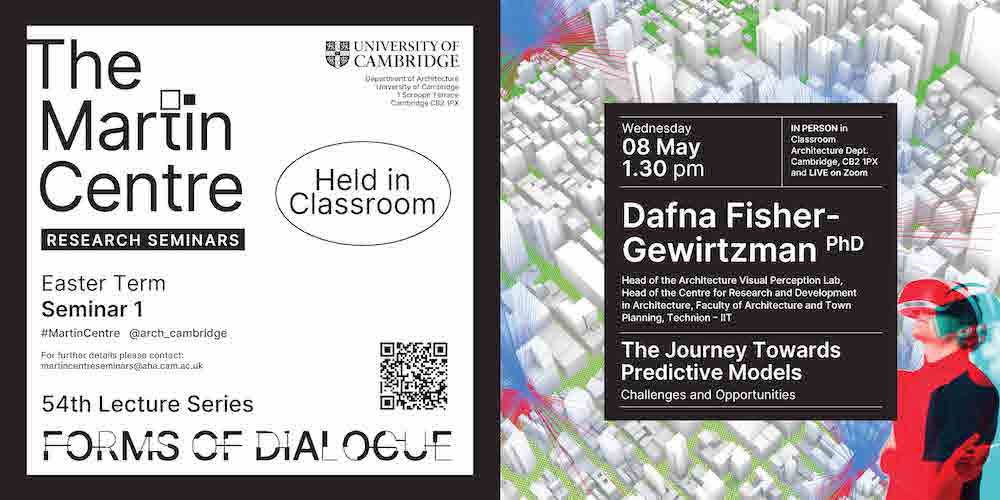
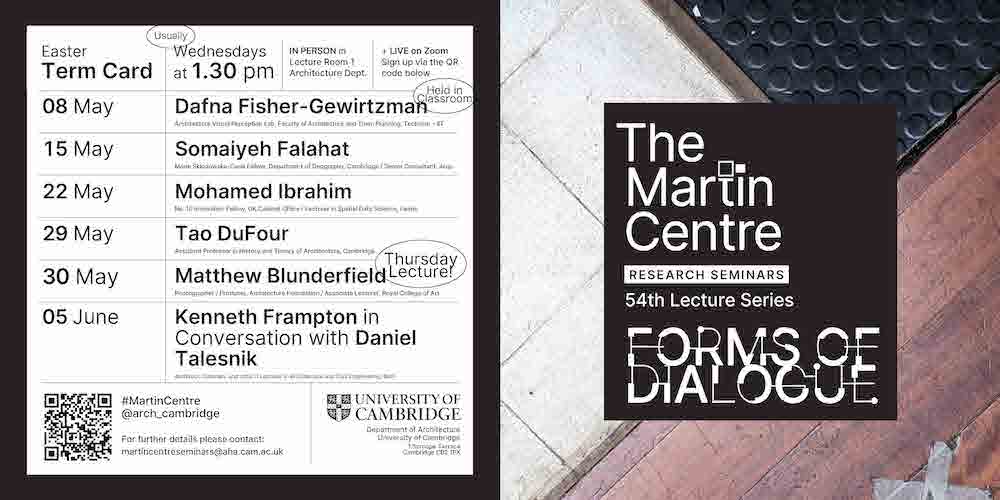


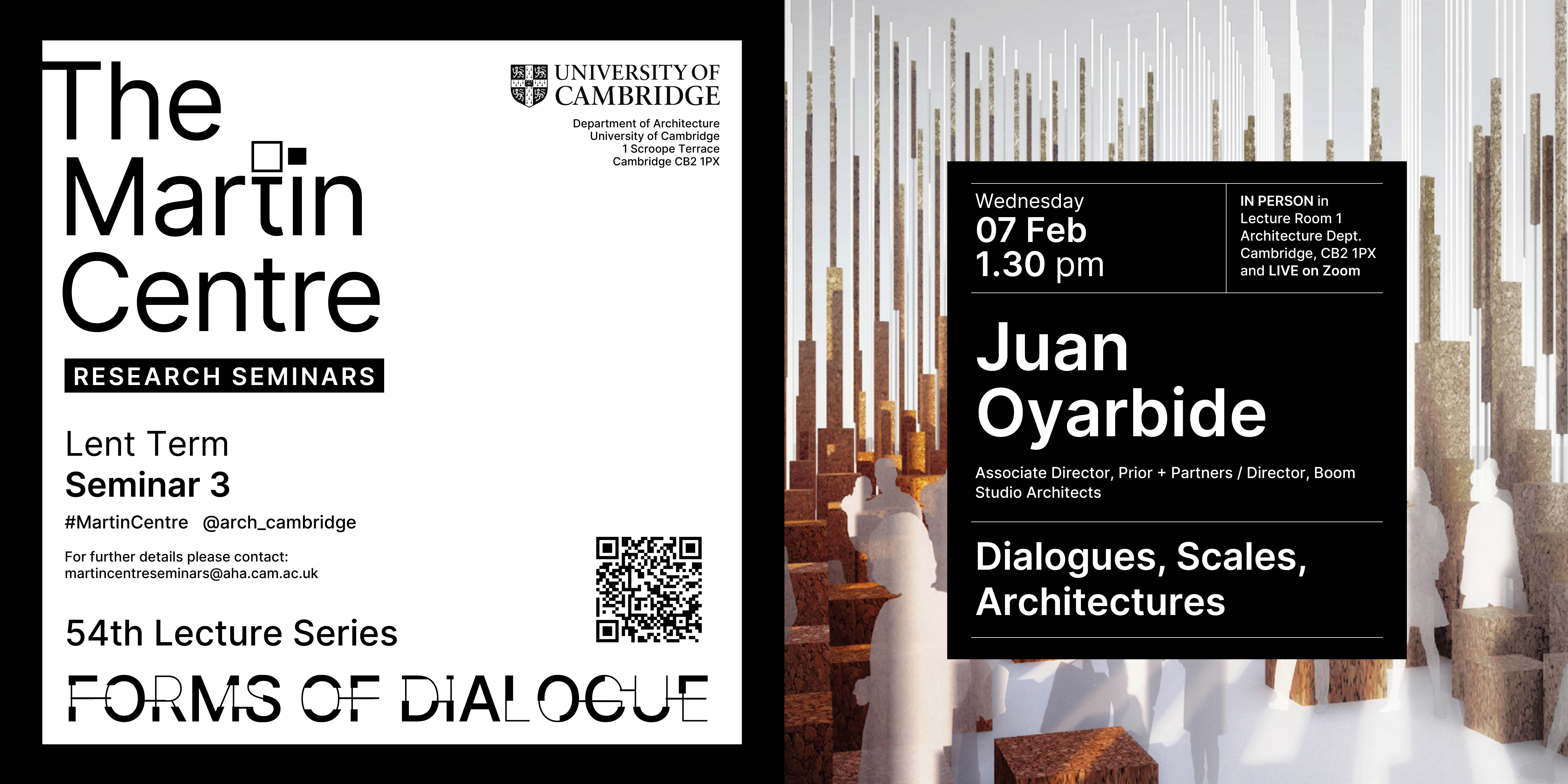

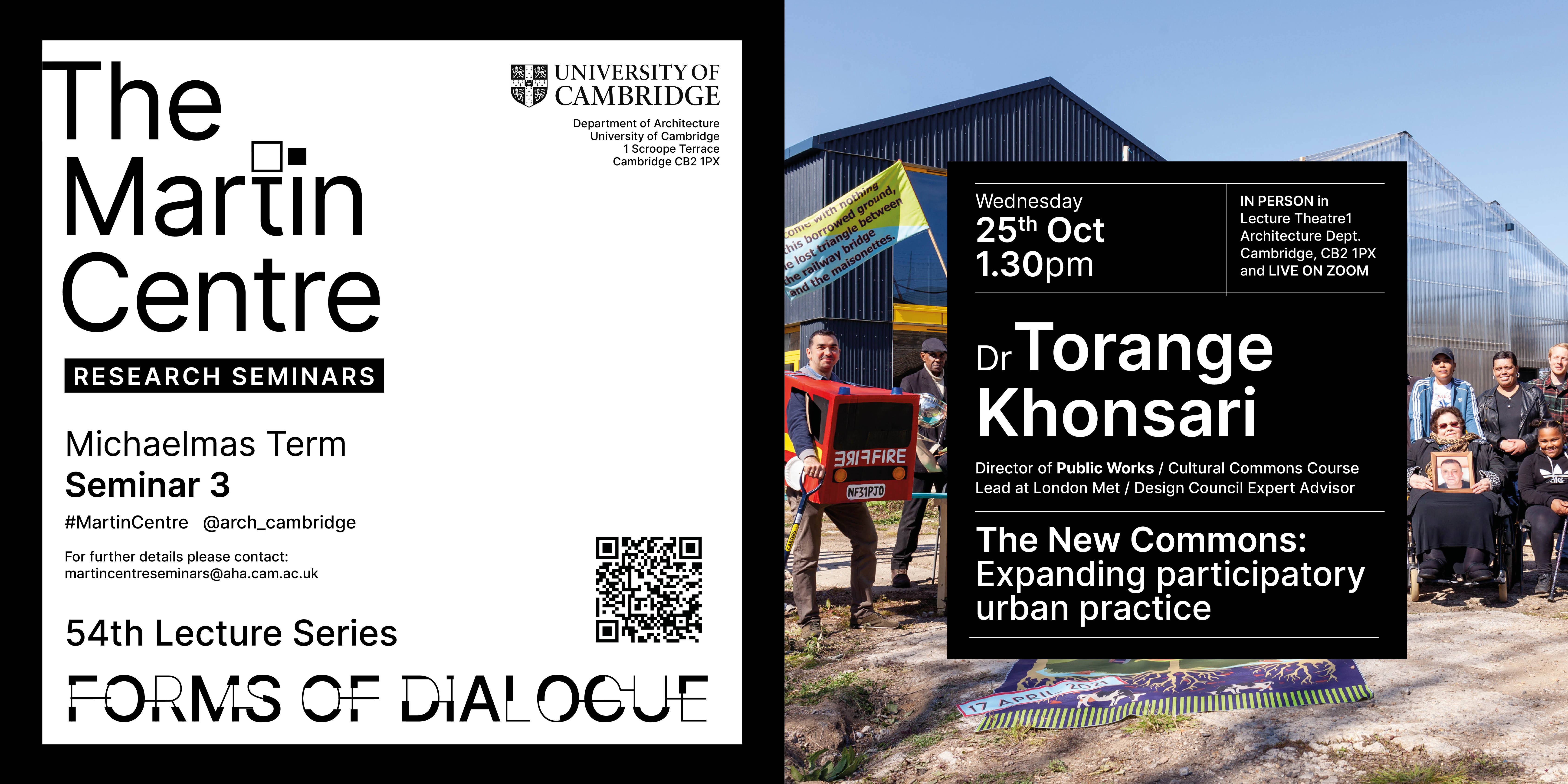
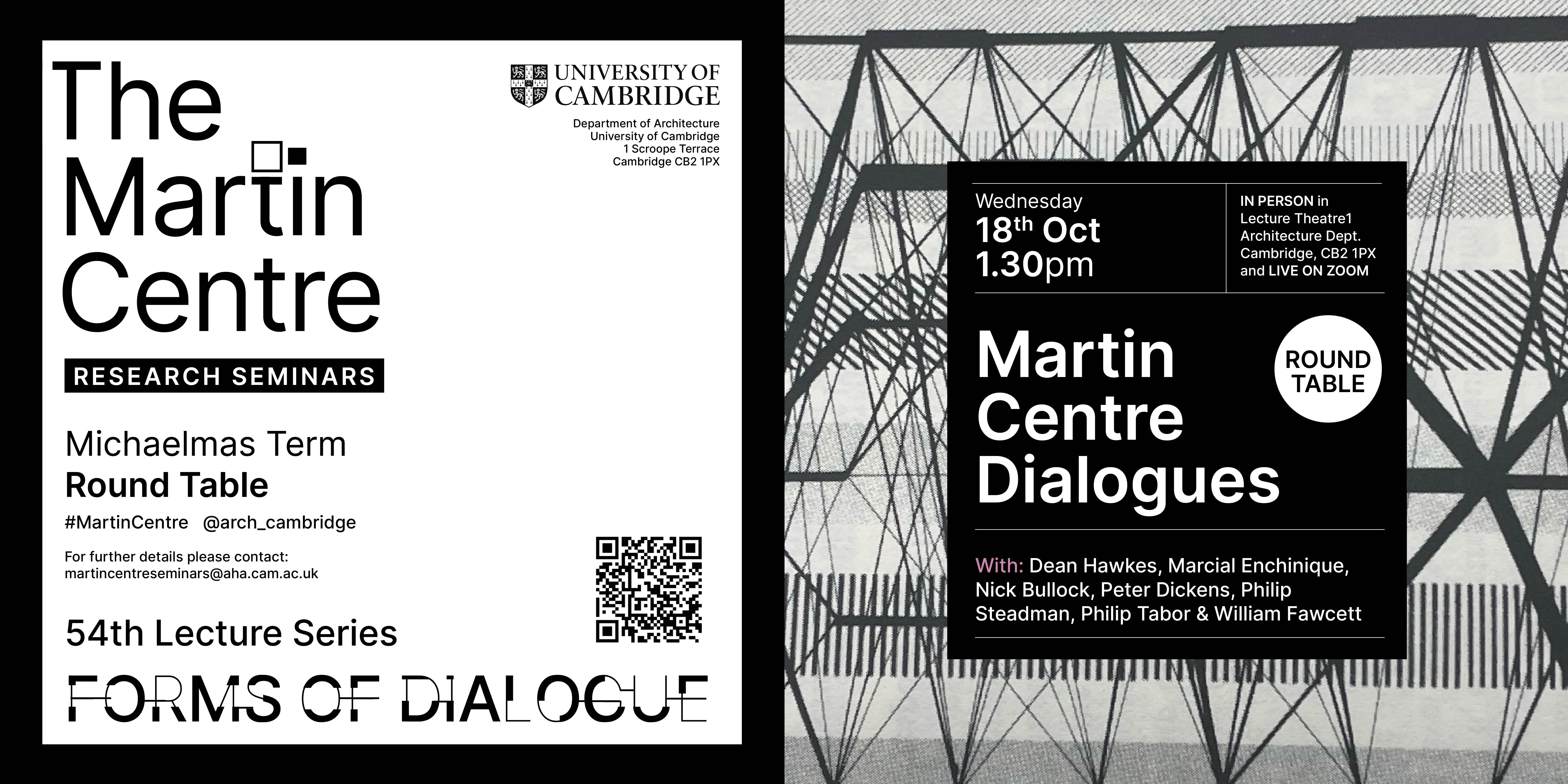
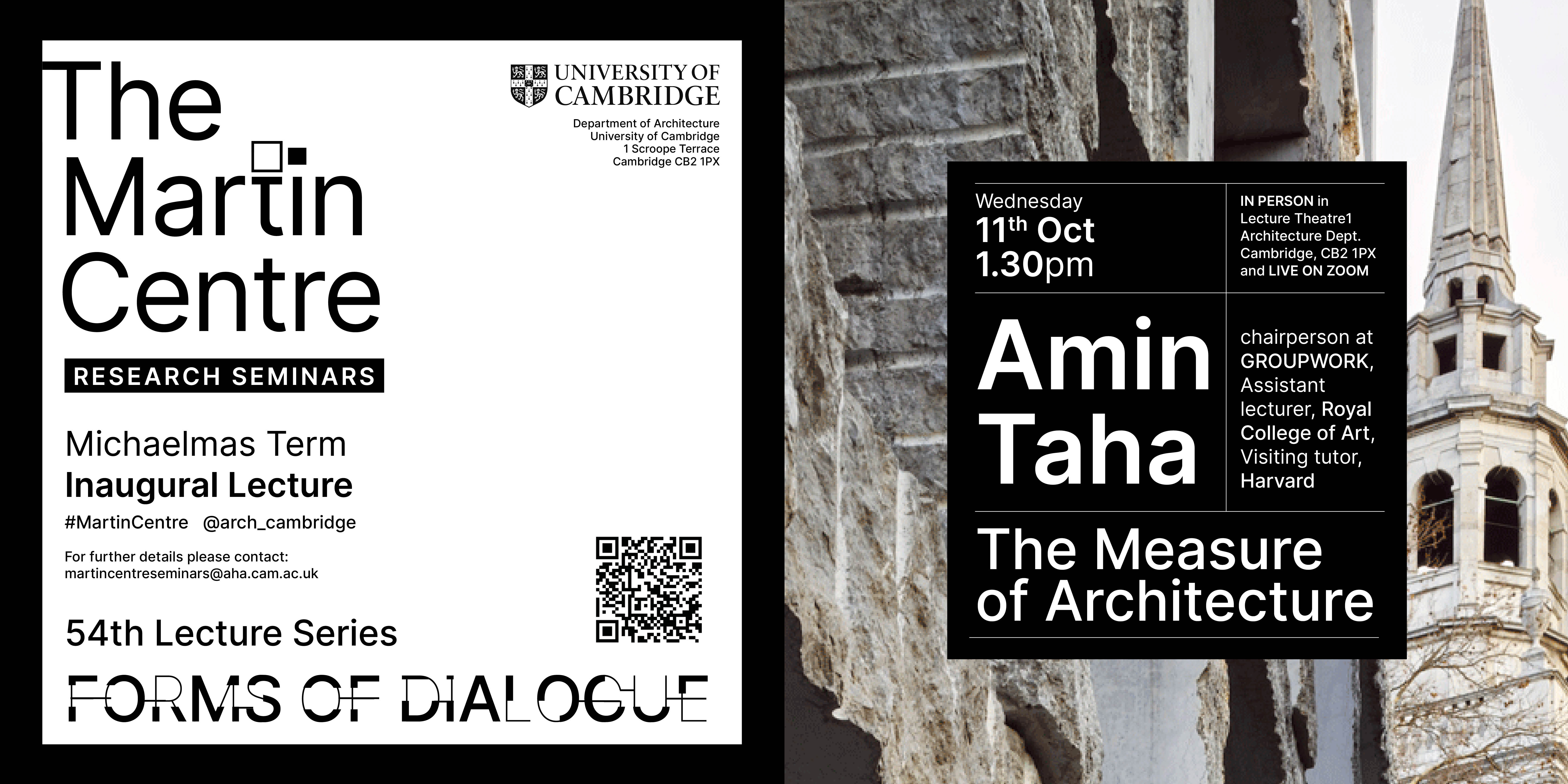
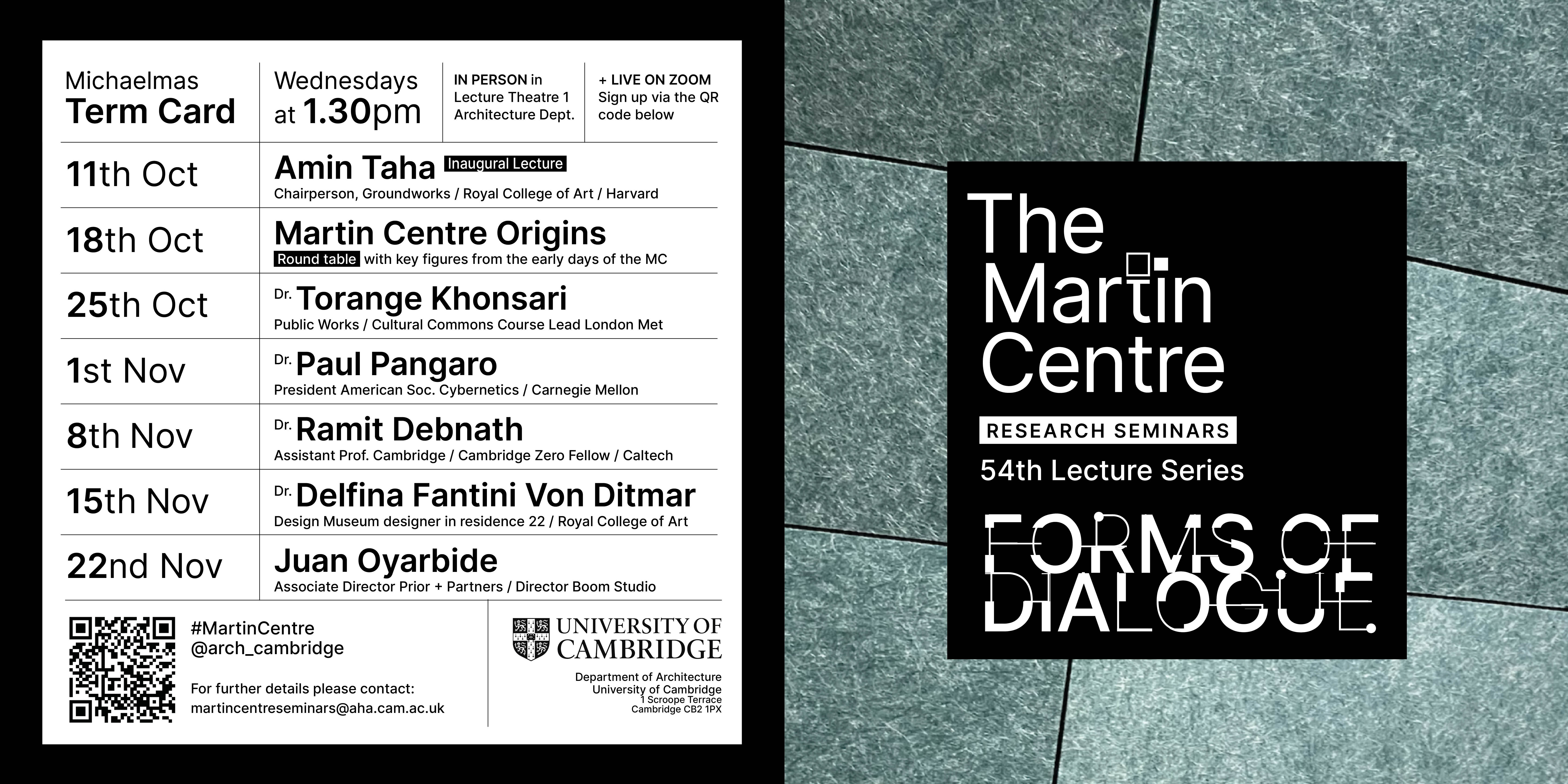
The Martin Centre Research Seminar Series is one of the longest-running in the field, with the current one being the 54th annual series. The seminar series is hosted and supported by the Martin Centre for Architectural and Urban Studies, the research arm of the Department of Architecture at the University of Cambridge. The seminars are held every Wednesday during term time at 1.30pm UK time in the Faculty’s lecture room. They are typically well-attended by both staff and students in the department, as well as by members from the University and the wider Cambridge community. You can find out more about the Martin Centre Research Seminar Series on our website and the virtual seminars can be found on YouTube.
Previous lectures are now available on our YouTube channel: https://www.youtube.com/@martincentreresearchsemina3554/videos
Follow us on Facebook: https://www.facebook.com/Martin-Centre-Seminar-Series-106106431088804/